Tag: Nigeria

  • How Mobile Money Changed Africa

    How Mobile Money Changed Africa

    Venmo, Cash App, and Zelle are familiar names in the world of mobile-based digital payments in the West, having revolutionized how money is transferred and received by millions of people.

    But did you know that Africa has been ahead of the game with its own mobile money systems since as far back as 2007?!

    That’s right.

    Today, we take you on a journey of how Africa became the biggest mobile money player in the world.

    Where it all began

    Once upon a time, not too long ago, accessing financial services was a challenge for many Africans. Unlike in the U.S. or Europe, traditional banking services were often very limited, especially in remote and rural areas.

    But then mobile money.

    In 2007, Safaricom, a leading mobile network operator in Kenya, launched a mobile money service called M-Pesa. Little did they know that this innovative concept would spark a digital revolution that would sweep across the continent.

    M-Pesa, meaning “mobile money” in Swahili, allowed users to save, send, and receive money using just their mobile phones. This groundbreaking innovation proved to be a game-changer, enabling people without bank accounts to participate in the formal financial system.
    In 2007, Safaricom, a leading telecommunications company in Kenya, launched a mobile money service called M-Pesa. Image credit: African Markets

    The initial idea behind M-Pesa was to create a convenient way for Kenyans to transfer money securely. The service quickly gained popularity, as people in remote areas, where traditional banking services were scarce, embraced it as a means to conduct financial transactions with ease. 

    By 2011, over 50% of the Kenyan adult population had an M-Pesa account, rising to 90% in 2016.

    In no time, mobile money took root and started to grow, not only in Kenya but also in neighboring countries.

    M-Pesa was launched in Tanzania the following year and is now present in at least 10 countries.

    So, what made mobile money so popular? 

    Well, let’s unravel its magic! 

    Imagine a scenario: a hardworking individual in a rural village wants to send money to their family in the city.

    Historically, this would involve a long and costly journey, with the risk of loss or theft. But with a mobile money account, a few taps on a phone screen can instantly transfer funds to their loved ones, efficiently.

    One of the key factors that contributed to the rapid adoption of mobile money was its simplicity: all you needed was a basic mobile phone, and suddenly, you had a bank in the palm of your hand.

    No more long queues or complicated paperwork. Money transfers could be done with a few simple clicks.

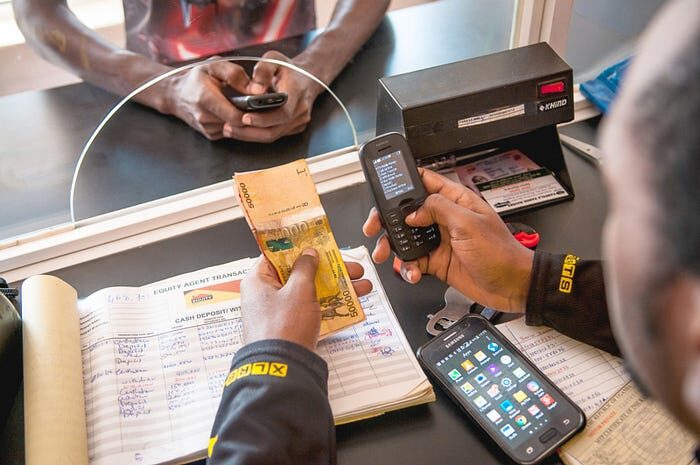
    For deposits and withdrawals, mobile money agents, often found in local shops, act as the bridge between the digital and physical worlds, allowing users to convert cash into digital currency and vice versa.
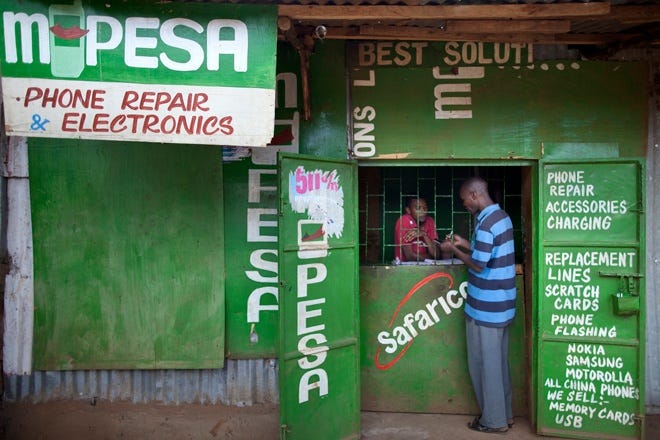
    An M-Pesa agent attends to a user. Image credit: HBS Digital Initiative

    By 2010, M-Pesa had acquired 10 million active users and by 2016, it served almost 29.5 million active customers through a network of more than 287,400 agents. In the same year, the service processed around 6 billion transactions, peaking in December at 529 transactions every second.

    The success of M-Pesa in Kenya sparked a wave of enthusiasm. As word spread about the convenience and reliability of mobile money, its impact began to reverberate throughout the continent. 

    Impressed by the service, other African countries eagerly jumped on the mobile money revolution, building theirs in M-Pesa’s image. 

    Over the next few years, the service spread to countries like Uganda, Ghana, Rwanda, and South Africa as mobile network operators and financial institutions started realizing the immense potential of mobile money. 

    MTN launched its MoMo service in Uganda in March 2009 and in Rwanda in February 2010. Telesom ZAAD in Somaliland in 2009 and Hormuud launched EVC Plus in Somalia in 2011.

    By 2011, more than 100 mobile money services were operating in Africa, reaching people who previously had limited access to formal financial services.

    Africa continues to lead global adoption

    Fast forward to today, more mobile money services have emerged in Africa while mobile money accounts and transaction value on the continent continue to skyrocket. 

    Africa accounted for up to 70% of the world’s $1 trillion mobile money value in 2021 after mobile money transactions on the continent jumped 39% from $495 billion in 2020 to $701.4 billion

    Last year, that rose a further 22% to a jaw-dropping $836.5 billion (bigger than the GDP of Nigeria, Africa’s largest economy!) but its share of the global $1.26 trillion mobile money value fell to 66.4%. 

    Per GSMA’s 2023 State of the Industry Report, mobile money is growing faster in sub-Saharan Africa than in other regions except for the Middle East & North Africa.

    However, it’s not just about the numbers

    Perhaps its greatest achievement, mobile money has brought financial inclusion to millions of Africans who were previously excluded from the formal economy. 

    Data from the World Bank shows that around 45% of people living in Sub-Saharan don’t have access to a bank account. But mobile phones are widespread across the continent and are helping to bridge the financial gap.

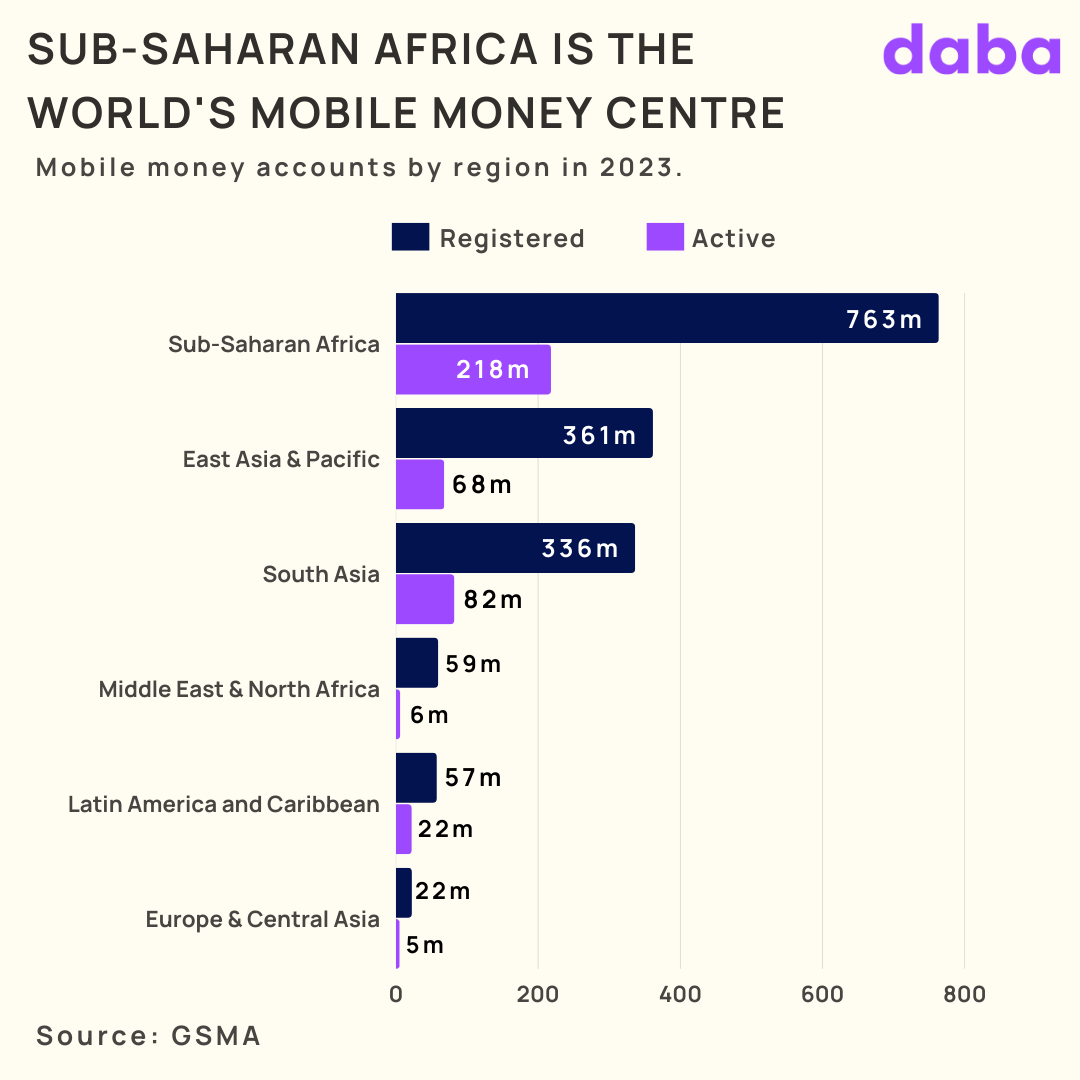
    As of 2022, Sub-Saharan Africa had up to 763 million registered mobile money accounts, more than double the figures in the next closest region, and more Africans now enjoy access to a whole range of financial services that were previously out of reach.

    The innovative service has empowered women entrepreneurs, allowing them to take charge of their finances and contribute to their families’ well-being; facilitated access to education and healthcare; paved the way for exciting innovations such as mobile banking apps and digital wallets. 
    Beyond money transfers…

    Mobile money services in Africa have also quickly evolved beyond simple person-to-person money transfers and cash in-cash out.

    Providers have continually expanded their services, introducing innovative features to meet the diverse needs of their users.

    For instance, mobile micro-loans and savings accounts empower individuals to access credit and save money, fostering entrepreneurship.

    In Kenya, M-Shwari allows users to save money and access micro-loans directly from their mobile wallets, creating opportunities for entrepreneurs and small business owners.

    Partnerships between mobile money providers and other companies have expanded the range of services available, with users now able to pay their electricity and water bills via mobile money and purchase airtime from network operators. 

    Health organizations have integrated mobile money into their operations, enabling payments for medical services and health insurance premiums.

    Mobile Money also promises to transform cross-border money transfer and international remittances in Africa, driven by companies like MFS Africa, Mama Money, and Paga, to name a few

    More innovation on the horizon

    Despite its transformative effect across the continent so far, it’s clear that the mobile money revolution in Africa is far from over. 

    Innovations continue to emerge, including interoperability between different mobile money platforms, making transactions even more convenient. 

    The potential for digital lending, savings, and insurance services on mobile money platforms holds great promise for the future.

    As the mobile money landscape continues to evolve, so is the competition. Telecom companies, financial institutions, and fintech startups are all in the race to capture a share of this rapidly expanding market.

    This healthy competition will only lead to improved services, lower transaction costs, and increased accessibility for users.

    The growth of mobile money in Africa is nothing short of awe-inspiring. 

    From humble beginnings in Kenya, it has spread like wildfire, empowering individuals, driving economic development, and transforming societies across the continent. 

    As mobile money continues to evolve and expand its horizons, it remains one shining example of how technology is being harnessed to drive positive change in Africa.
  • The Tide Rises for Climate Tech in Africa

    The Tide Rises for Climate Tech in Africa

    The tide is rising for climate tech in Africa. Fueled by a surge in investor interest, the sector is witnessing a wave of innovation, with over 3,000 startups pitching their solutions for a climate-resilient future.

    A new report, “Investing in Climate Tech Innovation in Africa,” by Catalyst Fund, dives into the dynamics of this burgeoning sector, offering invaluable insights for investors, innovators, and stakeholders alike.

    Tap here to read our summary of the report

  • CleanTech Drives FDI Flows to Africa

    CleanTech Drives FDI Flows to Africa

    Africa’s CleanTech landscape is experiencing an unprecedented boom, fueled by a combination of abundant renewable resources, a growing green consciousness, and significant international investment. 

    But clean energy investments remain concentrated in just a handful of countries while much of the continent’s clean energy potential remains untapped. The IEA estimates that Africa requires $2 trillion in investment to close this gap. 

    Foreign investors are keenly aware of this opportunity. In 2022, the sector led foreign direct investment into Africa, according to the Africa Attractiveness Report by global consulting giant EY, further cementing the technology industry’s central role in driving investments into the continent.

    Tap here to read our summary of the report

  • Meet the Jumia Mafia

    Meet the Jumia Mafia

    If you’re a keen follower of the African tech ecosystem, you must’ve heard of the Paystack, Careem, and Opay Mafia(s) by now. 

    But have you ever heard of the Jumia Mafia?

    For people not familiar with the name, though we hope there’s none, let’s give you a brief introduction to the company.

    An e-commerce giant

    Jumia started as an online retailer in Nigeria in 2012, co-founded by Jeremy Hodara and Sacha Poignonnec, ex-McKinsey consultants along with Tunde Kehinde and Raphael Kofi Afaedor.

    The company has since expanded to at least nine other African countries, where it offers several services, including digital payments and delivery. 

    In April 2019, the e-commerce operator became the first African startup to list on a major global stock exchange when it debuted on the New York bourse.

    One fact about Jumia that’s equally as impressive—as its NYSE IPO or standing as the continent’s largest e-commerce operator—but often overlooked is the impact that the company has had on Africa’s entrepreneurial ecosystem.

    Meet the Mafia

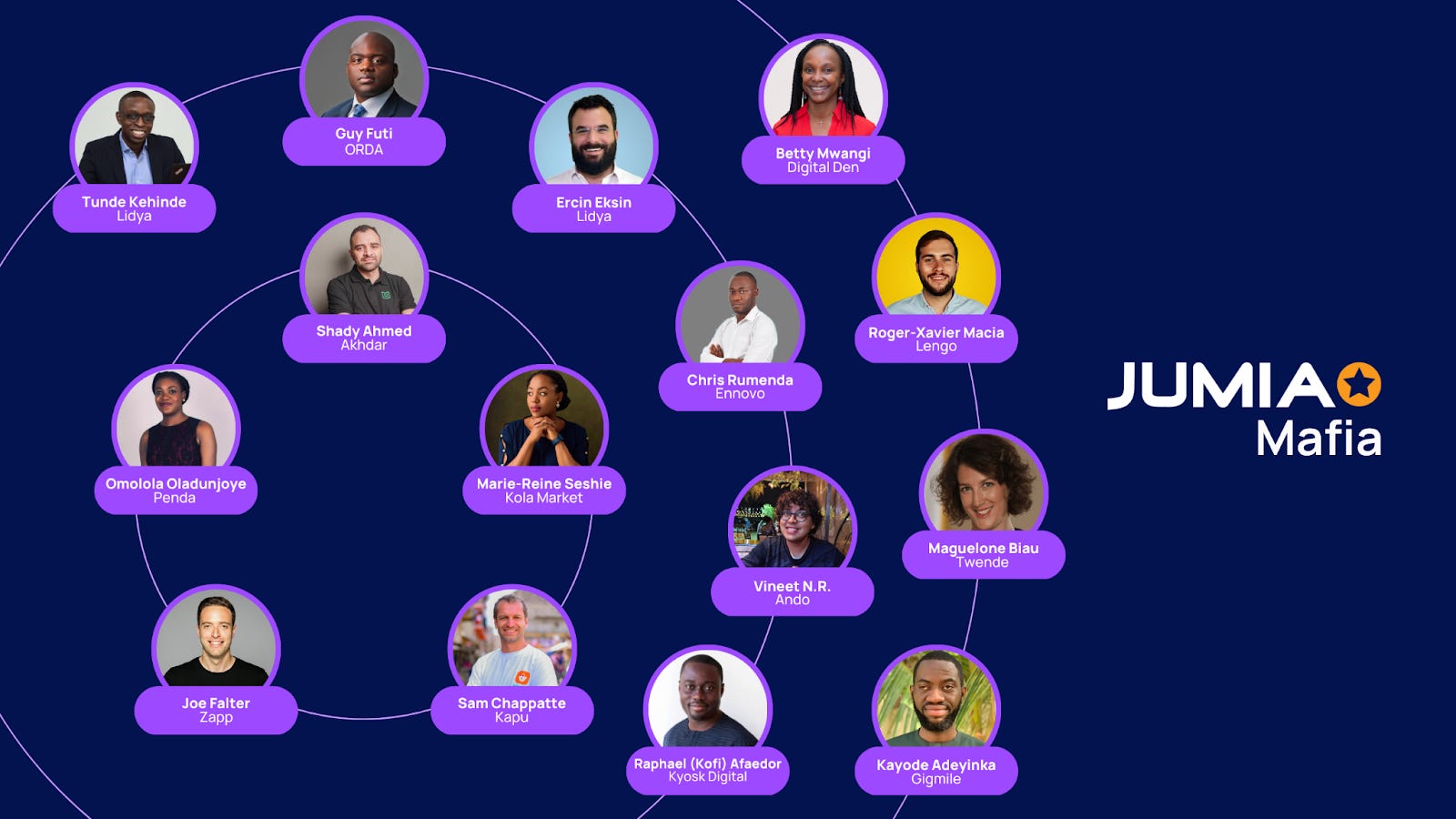
    Jumia has not only made waves in the African tech industry but also inspired a new generation of entrepreneurs who now run their respective exciting startups.

    Some of them include:

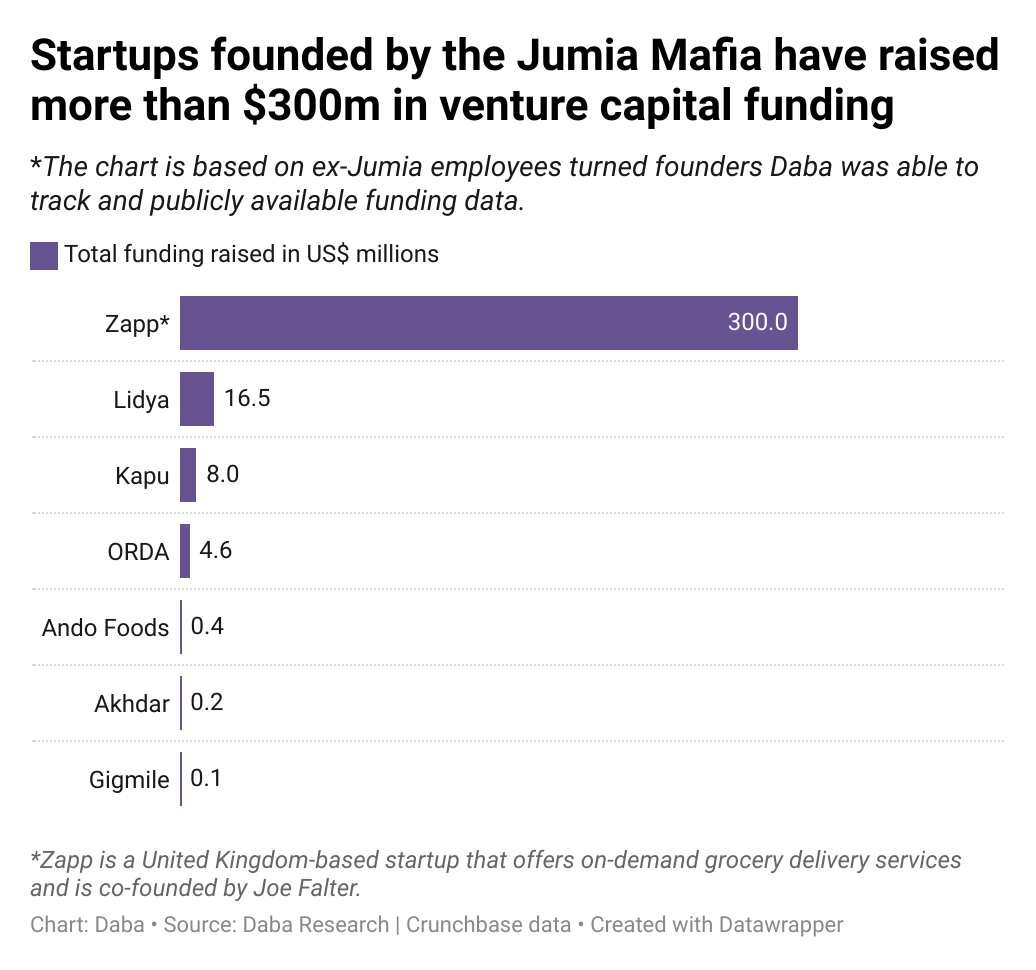
    • Tunde Kehinde and Ercin Eksin, co-founded Lidya, a Series B startup that provides SMEs with access to finance. The startup uses a credit-scoring system that analyzes a borrower’s online reputation and has raised $16.5 million since its launch.
    • Raphael Afaedor is another Jumia alumnus who co-founded Kyosk Digital, a platform that connects informal retailers using kiosks and other similar retail outlets directly to FMCG companies.
    • Maguelone Biau co-founded Twende, a ridesharing company that pools African city dwellers with the most direct, affordable, and reliable transport options.
    • Kayode Adeyinka is the CEO of Gigmile, a Techstars-backed startup building the services and financial infrastructure for the African gig economy.
    • Guy Futi runs ORDA, a startup he co-founded that offers cloud-based restaurant software built for African chefs and food business owners, as CEO.
    • Sam Chappatte’s Kapu is a new e-commerce platform that aims to “reduce the cost of living” in Africa. By sourcing directly from farms & manufacturers, creating a low-cost logistics model & minimal food waste, Kapu says it can sustainably pass on savings to its customers. These customers access even lower prices if they place the order as a group (“pamoja”).
    • Roger Xavier Macia, a former Chief Commercial Officer at Jumia Senegal, is now the co-founder of Lengo, a startup that combines AI technologies and retailer crowdsourcing to deliver real-time data on consumer goods for FMCGs in Africa.
    • Marie-Reine Seshie, Jumia’s former Head of Marketing in Ghana, is now the CEO and co-founder of Kola Market. The startup provides digital inventory management, marketing, and sales solutions to SMEs, powered by AI technology.
    • Omolola Oladunjoye, ex-Chief Commercial Officer at Jumia Nigeria, now runs Penda LLC – a fully integrated social commerce platform across Africa.
    • Joe Falter, a former executive at Jumia in the UAE for nearly eight years, co-founded Zapp, a startup that provides on-demand grocery delivery services, has raised around $300m, and is backed by some of the world’s leading venture investors.

    These are just some of the incredible startups that have been created by former Jumia employees.

    Jumia is one of Africa’s earliest tech companies and ranks among the region’s biggest startup success stories.

    So it comes as little surprise that former employees and founders have gone on to create their own incredible technology companies, disrupting various industries across the continent.

    By sector classification, well over half, or 70% of startups founded by Jumia alumni are either in retail, e-commerce, foodtech, or fintech. 

    This suggests that Jumia’s early success as an e-commerce giant has created a positive spillover effect, as former employees leverage their experience and networks to create new businesses in related industries such as retail, last-mile delivery & logistics, and digital payments – all crucial components of e-commerce.

    Naturally, working in a particular industry provides individuals with valuable insights into the workings of that industry and complementary ones.

    Hence, ex-Jumia employees are well-positioned to leverage their expertise and create innovative solutions to meet the needs of consumers in these industries. 

    And they’re doing so, successfully and with sufficient VC backing.

    Collectively, about 14 of such startups we tracked have raised around $330 million in venture capital funding, with over half of them at the seed stage or above. 

    This shows the talent and expertise that exists within the Jumia ecosystem, which has helped to create a vibrant startup culture out of emerging markets where it operates. 

    The funding also signals the emergence of a new generation of innovators who are able to attract significant investment and build successful businesses—a positive development for the tech industry.

    In addition, it reflects how the African startup ecosystem is becoming increasingly mature and sophisticated, with successful companies spawning new ventures and nurturing the next generation of entrepreneurs.

    Altogether, these startups have created around 1,300 direct jobs. 

    Jumia has served as a springboard for talented individuals who are contributing to the growth of not only Africa’s startup ecosystem but also globally, even after leaving the company.

    It’s impressive to see how the e-commerce giant’s success has paved the way for some of Africa’s most brilliant ‘techpreneurs’.

    Truly, great companies have the power to inspire incredible founders and fuel the growth of an entire entrepreneurial ecosystem! 

    By doing so, they help to build a stronger economy and a better future for all.

  • Africa’s Millionaire Population Set For Decade-Long Boom

    Africa’s Millionaire Population Set For Decade-Long Boom

    Not all Africans are poor. This is arguably the key takeaway from the 2023 edition of the annual Africa Wealth Report by London-based Henley & Partners and New World Wealth, which challenges the common stereotype that Africa is uniformly poor.

    The study, a definitive guide to African wealth, takes a close look at private wealth on the continent. Africa’s wealth is concentrated in five key markets: South Africa, Egypt, Nigeria, Kenya, and Morocco but their dominance could potentially be challenged by emerging economies like Mauritius and Rwanda, which could see a potential shift in the dominance of these wealth markets over the next decade.

    Read our summary of the report here

  • Comment fonctionne l’investissement dans les startups ?

    Comment fonctionne l’investissement dans les startups ?

    Dans le paysage commercial dynamique d’aujourd’hui, les startups se sont imposées comme les moteurs de l’innovation, perturbant les industries traditionnelles et façonnant l’avenir.

    Ce post vise à démystifier le monde des startups, en éclairant ce qu’elles sont, comment fonctionne l’investissement dans les startups, comment les investisseurs peuvent gagner de l’argent en investissant dans les startups, et le processus de sortie d’un investissement dans une startup.

    Qu’est-ce qu’une startup ?

    Une startup est une jeune entreprise à ses débuts, généralement fondée par des entrepreneurs avec une idée révolutionnaire ou une solution unique à un problème.

    Les startups se caractérisent par leur potentiel de croissance rapide, leur évolutivité et leur vision de perturber ou de créer de nouveaux marchés. Elles opèrent souvent dans des secteurs axés sur la technologie, mais peuvent s’étendre à diverses industries.

    Qu’est-ce que l’investissement dans les startups ?

    L’investissement dans les startups consiste à fournir un soutien financier à des entreprises en phase de démarrage en échange d’une participation au capital.

    Ce processus se déroule généralement lors de différentes phases de financement, où les startups lèvent des capitaux pour stimuler leur croissance. Les investisseurs peuvent participer à ces étapes ou phases de différentes manières, comme l’investissement providentiel, les fonds de capital-risque ou les plateformes de financement participatif.

    En règle générale, l’investissement dans les startups se déroule à différentes étapes, notamment le démarrage, la série A, la série B, etc., jusqu’à l’introduction en bourse (IPO) et la sortie, etc., chaque étape représentant une phase distincte de la croissance et du développement d’une startup.

    Il est important de noter que toutes les startups ne passent pas par toutes ces étapes, et la chronologie et les besoins de financement peuvent varier considérablement.

    Lors de l’investissement dans les startups, la due diligence est cruciale. Les investisseurs analysent en profondeur le modèle commercial de la startup, son potentiel de marché, l’expertise de l’équipe, le paysage concurrentiel et les projections financières.

    En menant des recherches approfondies, les investisseurs peuvent identifier les startups prometteuses ayant plus de chances de réussir.

    Comment pouvez-vous gagner de l’argent en investissant dans les startups ?

    Investir dans les startups offre le potentiel de rendements significatifs, mais comporte également des risques plus élevés par rapport aux voies d’investissement traditionnelles. Voici quelques moyens pour les investisseurs de gagner de l’argent grâce aux investissements dans les startups :

    Appréciation du capital : À mesure qu’une startup se développe et atteint des étapes clés, la valeur de ses actions peut augmenter. Les investisseurs qui ont acheté des actions à un stade précoce peuvent bénéficier de l’appréciation du capital lorsque l’entreprise réussit et attire d’autres investissements ou devient publique.

    Dividendes ou distribution de bénéfices : Certaines startups peuvent générer des bénéfices à un stade précoce. Dans de tels cas, les investisseurs peuvent recevoir des dividendes ou des distributions de bénéfices, fournissant ainsi un flux de revenus régulier.

    Acquisition ou fusion : Les startups dotées de produits ou de technologies convaincants deviennent souvent des cibles d’acquisition attrayantes pour de plus grandes entreprises. Si une startup est acquise ou fusionne avec une autre entreprise, les investisseurs peuvent réaliser un profit de la vente de leurs actions. Par exemple, Instagram, l’application populaire de partage de photos, a été acquise par Facebook en 2012 pour environ 1 milliard de dollars. Cette acquisition a généré des rendements importants pour les investisseurs de première heure.

    Introduction en bourse (IPO) : Une autre stratégie de sortie potentielle pour les investisseurs dans les startups est une IPO. Lorsqu’une startup devient publique, les investisseurs peuvent vendre leurs actions sur le marché boursier, réalisant des gains si la valorisation de l’entreprise a augmenté. En 2019, le géant du commerce électronique africain Jumia est entré en bourse, offrant à ses premiers investisseurs la possibilité de sortir et de réaliser des profits.

    Marché secondaire : Les investisseurs peuvent vendre leurs actions sur un marché secondaire, où des investisseurs privés achètent et vendent des actions de sociétés non cotées en bourse. Cela permet aux investisseurs de sortir de leurs investissements avant une IPO ou une acquisition. SharesPost et EquityZen sont des exemples de plateformes de marché secondaire qui facilitent l’achat et la vente d’actions de startups.

    En conclusion, investir dans les startups peut être une entreprise gratifiante mais risquée. Comprendre la nature des startups, effectuer une due diligence approfondie et diversifier son portefeuille d’investissement sont des étapes essentielles pour réussir dans l’investissement dans les startups.

  • Pourquoi devriez-vous investir en Afrique ?

    Pourquoi devriez-vous investir en Afrique ?

    L’Afrique offre non seulement une richesse culturelle et des paysages à couper le souffle, mais elle propose également d’incroyables opportunités d’investissement.

    Cependant, investir sur le continent demande de la patience, car les stratégies qui réussissent dans un pays peuvent ne pas fonctionner dans d’autres.

    Dans cet article, nous explorons cinq raisons convaincantes pour lesquelles vous devriez envisager d’investir en Afrique, même si vous résidez en dehors du continent.

    Un marché jeune et en croissance

    L’Afrique compte plus de 1,3 milliard d’habitants et est la région la plus jeune du monde, avec près de 60 % de sa population ayant moins de 25 ans et un âge médian de 19 ans.

    Le continent affiche également une population en rapide croissance et une classe moyenne en expansion. Selon le Forum économique mondial, d’ici 2030, plus de 40 % des Africains appartiendront à la classe moyenne ou supérieure, ce qui entraînera une demande accrue de biens et de services.

    À cette époque, la consommation des ménages devrait atteindre 2 500 milliards de dollars, plus du double de celle de 2015, qui s’élevait à 1 100 milliards de dollars.

    Avec l’urbanisation croissante et l’augmentation des revenus disponibles, le continent représente un marché inexploité prêt à être exploré par les investisseurs, offrant un potentiel de croissance considérable dans divers secteurs.

    Innovation et entrepreneuriat

    L’Afrique connaît une montée remarquable de l’innovation et de l’entrepreneuriat. Des start-ups fintech aux solutions d’énergie renouvelable, les entrepreneurs africains exploitent la technologie pour résoudre des problèmes locaux et créer des entreprises évolutives.

    Le continent a produit au moins sept licornes, des entreprises privées valant un milliard de dollars ou plus.

    L’une de ces start-ups est Flutterwave, une licorne fintech nigériane qui révolutionne les paiements numériques à travers le continent. Une autre entreprise remarquable est Andela, une entreprise panafricaine qui met en relation des développeurs de logiciels qualifiés avec des entreprises mondiales.

    De plus, Jumia, souvent appelée “l’Amazon de l’Afrique”, est devenue un acteur dominant du commerce électronique.

    Ces start-ups innovantes démontrent la montée en puissance croissante de l’Afrique sur la scène technologique mondiale, stimulant la croissance économique et favorisant les avancées technologiques à travers le continent.

    En investissant dans les start-ups africaines et les fonds de capital-risque, vous pouvez soutenir ces esprits innovants tout en bénéficiant potentiellement de leurs succès futurs.

    Transformation numérique rapide

    L’Afrique a connu une transformation numérique rapide au cours des dernières années, révolutionnant divers secteurs.

    Avec la pénétration croissante d’Internet, la connectivité mobile et des solutions innovantes, le continent a adopté la technologie dans tous les aspects de la vie.

    Selon la GSMA, l’Afrique ajoutera près de 100 millions de nouveaux abonnés d’ici 2025, portant le nombre total d’abonnés à 613 millions, soit près de la moitié de la population de la région.

    De plus, la contribution de l’industrie mobile à son PIB atteindra près de 155 milliards de dollars.

    De la banque mobile aux plateformes de commerce électronique, la révolution numérique de l’Afrique permet aux individus de se doter d’outils technologiques, de combler la fracture numérique et de créer des opportunités de développement socio-économique dans tout le continent.

    Abondance de ressources naturelles

    L’Afrique est bénie par une abondance de ressources naturelles qui contribuent de manière significative à son potentiel économique.

    Avec d’importants gisements minéraux, le continent détient une part substantielle des réserves mondiales d’or, de diamants, de platine et d’autres métaux précieux. Il est également riche en ressources pétrolières et gazières, avec des pays comme le Nigeria, l’Angola et l’Algérie étant de grands producteurs.

    De plus, l’Afrique possède d’importantes réserves de bois, des terres agricoles fertiles et une gamme diversifiée de faune et de flore.

    Ces ressources offrent d’immenses opportunités de croissance économique, de développement industriel et d’investissement étranger.

    Avec la bonne stratégie d’investissement, vous pouvez profiter de la richesse des ressources du continent et contribuer à son développement durable.

    Économies plus fortes et plus dynamiques

    L’Afrique connaît une transformation remarquable vers des économies plus diversifiées et plus fortes. En mettant l’accent sur l’innovation, l’entrepreneuriat et le développement durable, plusieurs nations africaines réalisent des progrès significatifs.

    Le continent a assisté à une montée en puissance des avancées technologiques, favorisant la transformation numérique et le contournement des barrières infrastructurelles traditionnelles.

    Des pays comme le Nigeria, le Kenya et l’Afrique du Sud sont devenus des pôles technologiques, attirant des investissements mondiaux et favorisant l’émergence de start-ups locales.

    Les gouvernements africains soutiennent également des secteurs tels que l’agriculture, les énergies renouvelables et la fabrication pour stimuler la croissance économique et réduire la dépendance aux matières premières.

    Les collaborations régionales, telles que la Zone de libre-échange continentale africaine (ZLECAf), promeuvent le commerce intra-africain, ouvrant de nouveaux marchés et encourageant l’intégration économique.

    Cette dynamique vers des économies plus diversifiées et plus fortes est sur le point de libérer le potentiel immense de l’Afrique, d’autonomiser sa population et d’offrir aux investisseurs des opportunités passionnantes à travers le continent.

    Investir en Afrique offre un monde d’opportunités pour ceux qui résident en dehors du continent.

    Avec un marché inexploité, des ressources abondantes, une infrastructure en croissance, un écosystème entrepreneurial dynamique et des politiques favorables, l’Afrique est prête pour la croissance économique et le développement.

  • Why Should You Invest in Africa?

    Why Should You Invest in Africa?

    Africa is not only rich in cultural heritage and breathtaking landscapes but also offers incredible investment opportunities. 

    But investing in the continent requires patience as strategies that succeed in one country may not work in others. 

    In this post, we explore five compelling reasons why you should consider investing in Africa, even if you reside outside the continent.

    A young and fast-growing market

    Africa has over 1.3 billion people and is the world’s youngest region, with almost 60% of its population under 25 years old while the median age is 19.

    The continent also boasts a rapidly growing population and an expanding middle class. According to the World Economic Forum, by 2030, over 40% of Africans will belong to the middle or upper classes, and there will be a higher demand for goods and services. 

    By that time, household consumption is expected to reach $2.5 trillion, more than double that of 2015 at $1.1 trillion.

    With increasing urbanization and rising disposable incomes, it presents an untapped market ready for investors to tap into a vast consumer base, which offers tremendous growth potential across various sectors.

    Innovation and entrepreneurship

    Africa is witnessing a remarkable surge in innovation and entrepreneurship. From fintech startups to renewable energy solutions, African entrepreneurs are harnessing technology to solve local challenges and create scalable businesses.

    The continent has produced at least seven unicorns—private companies worth $1 billion or more. 

    One such startup is Flutterwave, a Nigerian fintech unicorn revolutionizing digital payments across the continent. Another standout is Andela, a pan-African company connecting skilled software developers with global companies.

    These innovative startups demonstrate Africa’s increasing prominence in the global tech landscape, fueling economic growth and driving technological advancements across the continent.

    By investing in African startups and venture capital funds, you can support these innovative minds while potentially benefiting from their future successes.

    Rapid digital transformation

    Africa has witnessed a rapid digital transformation in recent years, revolutionizing various sectors. 

    With increasing internet penetration, mobile connectivity, and innovative solutions, the continent has embraced technology in all facets of life.

    According to GSMA, Africa will add nearly 100 million new subscribers by 2025, bringing the total number of subscribers to 613 million – almost half of the region’s population. 

    More so, the contribution of the mobile industry to its GDP will grow to almost $155 billion.

    From mobile banking to e-commerce platforms, Africa’s digital revolution is empowering individuals, bridging the digital divide, and creating opportunities for socio-economic development across the continent.

    The abundance of natural resources

    Africa is blessed with an abundance of natural resources that contribute significantly to its economic potential. 

    With vast mineral deposits, the continent holds a substantial share of the world’s reserves of gold, diamonds, platinum, and other precious metals. It is also rich in oil and gas resources, with countries like Nigeria, Angola, and Algeria being major producers. 

    Additionally, Africa possesses extensive reserves of timber, fertile agricultural land, and a diverse range of flora and fauna. 

    These resources present immense opportunities for economic growth, industrial development, and foreign investment. 

    With the right investment strategy, you can benefit from the continent’s rich resources and contribute to its sustainable development.

    Stronger and more dynamic economies

    Africa is experiencing a remarkable shift towards diverse and stronger economies. With a focus on innovation, entrepreneurship, and sustainable development, several African nations are making significant strides. 

    The continent has witnessed a surge in technological advancements, fostering digital transformation and leapfrogging traditional infrastructure barriers.

    Countries like Nigeria, Kenya, and South Africa have emerged as tech hubs, attracting global investments and nurturing homegrown startups. African governments are also supporting sectors like agriculture, renewable energy, and manufacturing to stimulate economic growth and reduce dependency on commodities.

    Regional collaborations, such as the African Continental Free Trade Area (AfCFTA), are promoting intra-African trade, opening up new markets, and encouraging economic integration. 

    Africa’s total exports are projected to reach approximately $952 billion by 2035, driven by the growth of regional trade and enhanced connectivity, according to a new report by Standard Chartered.

    This momentum towards diverse and stronger economies is poised to unleash Africa’s immense potential, empowering its people and offering investors exciting opportunities across the continent.

    Investing in Africa presents a world of opportunities for those outside the continent. 

    With an untapped market, abundant resources, growing infrastructure, a vibrant entrepreneurial ecosystem, and favorable policies, Africa is poised for economic growth and development.

    Disclaimer: This material has been presented for informational and educational purposes only. The views expressed in the articles above are generalized and may not be appropriate for all investors. The information contained in this article should not be construed as, and may not be used in connection with, an offer to sell, or a solicitation of an offer to buy or hold, an interest in any security or investment product. There is no guarantee that past performance will recur or result in a positive outcome. Carefully consider your financial situation, including investment objective, time horizon, risk tolerance, and fees prior to making any investment decisions. No level of diversification or asset allocation can ensure profits or guarantee against losses. Articles do not reflect the views of DABA ADVISORS LLC and do not provide investment advice to Daba’s clients.

  • Why Big Tech is Building Data Centers in Africa

    Why Big Tech is Building Data Centers in Africa

    A rapidly growing digital economy in Africa is drawing investments from the world’s biggest tech companies into the continent’s data center market, which is largely untapped.


    For over a decade, Africa has been experiencing a massive boom in mobile internet adoption, outpacing other regions globally.

    This fast-growing mobile economy has enabled the emergence of several mobile-led tech solutions on the continent, such as mobile money and online shopping.

    And the startups providing these services have drawn attention, and billions of dollars in venture funding, from the world’s biggest tech companies and investors.

    In 2022 alone, African startups secured $6.5 billion in venture funding, an 8% increase from the previous year, while global VC investments declined -35%.

    But it’s not just startups and software solutions pulling investments in Africa’s digital economy.

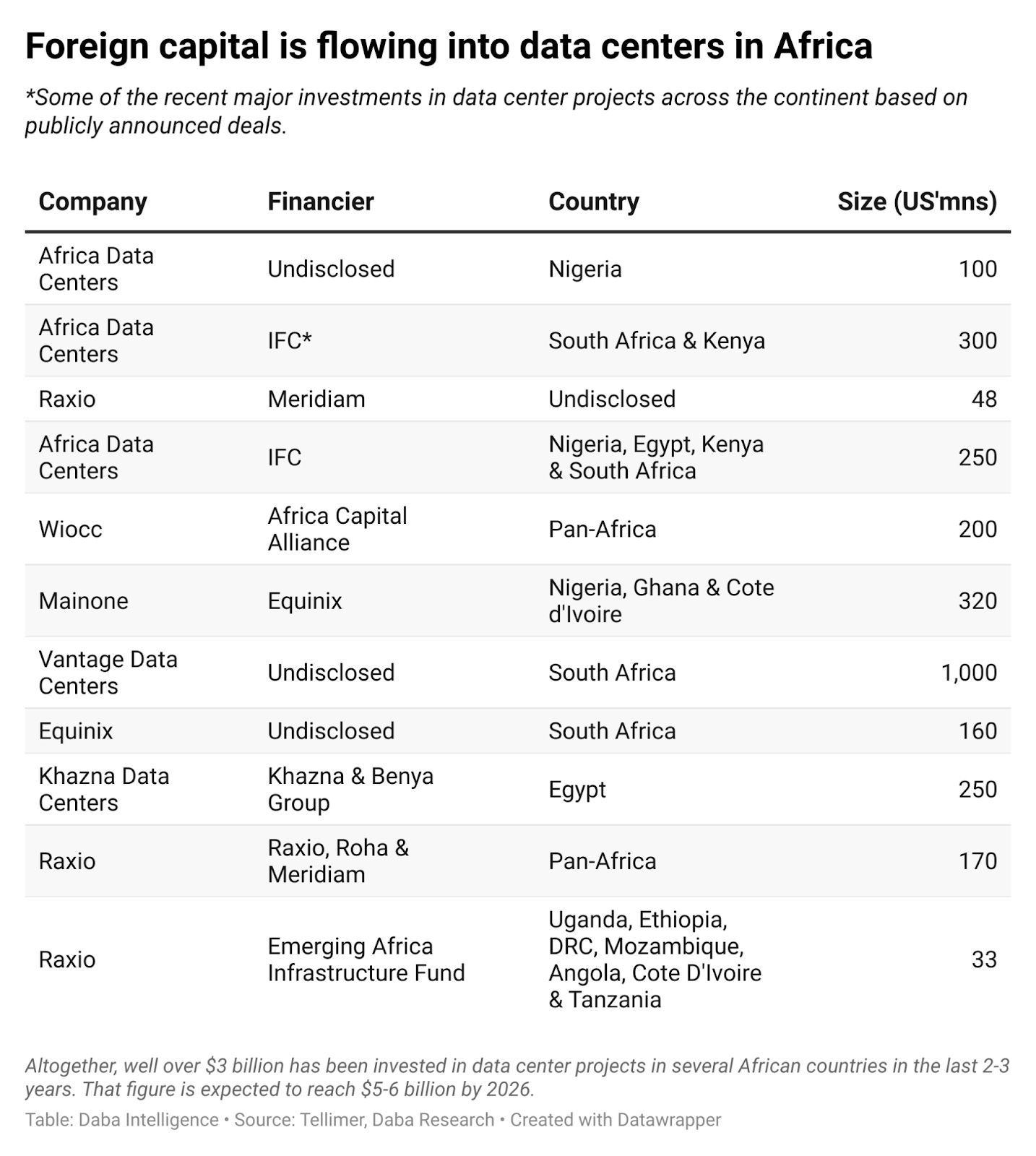
    Foreign capital has also flown into digital, hardware infrastructure, especially data centers.

    OracleMicrosoftAmazon, Equinix, and Huawei are some big names building or buying data centers across Africa.

    Regional operators such as MainOne, Africa Data Centers, Raxio, Icolo.Io (Digital Realty), and IXAfrica as well as the likes of Telecom Egypt, NTT Global Data Centers, Paratus Namibia, Rack Centre, Teraco Data Environments (Digital Realty), and Wingu are also big players in the space.

    In 2022, the market also witnessed the entry of investors like Vantage Data Centers, Airtel Nigeria, Cloudoon, Open Access Data Centres, and Kasi Cloud.

    For instance, Open Access Data Centres opened more than 20 data center facilities in South Africa and Nigeria.

    Together, they’ve invested well over $4 billion in data center projects across Africa since 2021 at least.

    But, what exactly are data centers, and why are big tech players racing to build them in Africa?

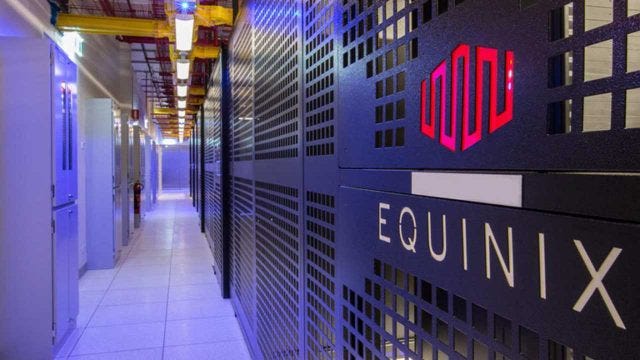
    US-based Equinix acquired West African data center and connectivity solutions provider, MainOne, for $320 million in 2022. Image credit: The Guardian Nigeria

    The backbone of the digital world

    The first things that come to mind when we hear words like “online”, “digital”, “digital world” or “technology” are probably the internet, social media, mobile apps, business software, etc.

    But have you ever wondered where all the information on the internet we access through smartphones or computers is stored? 

    Well, data centers are like giant warehouses that store and protect all the data we see online.

    They’re super crucial for the internet to work smoothly and are the major enablers of online services—think digital banking, social media, streaming services, video calls, and about everything we do online.

    Just as a library stores and organizes books for easy access, data centers store and manage an immense amount of digital information. 

    And with the increasing amount of information and data to store as the digital economy continues to grow rapidly, they have become even more critical.

    How does this concern Africa?

    There’s a massive opportunity to build these data centers on the continent and make lots of money from it!

    Nairobi-based East Africa data center, a subsidiary of Liquid Telecom Kenya. Image credit: ESI Africa

    The data center opportunity in Africa

    Emerging technologies such as AI, IoT, or cloud computing are not new in Africa.

    But there has been a recent surge in the adoption of such enterprise digital solutions, especially among mid-to-large businesses across several sectors—a trend mainly induced by the Covid-19 pandemic.

    In South Africa alone, the use of cloud computing is expected to grow 25%, generating up to $1.5 billion by 2024.

    And seeing this growth, global cloud services providers such as Amazon Web Services, Microsoft, IBM, and Oracle are expanding their presence in Africa with new cloud regions being set up.

    Be it enabling consumers to buy food or clothes online or make money transfers via mobile apps, these activities generate huge volumes of data that need to be stored adequately.

    This, in turn, creates a higher demand for data centers.

    For investors, this presents a great opportunity to fill significant gaps, as most of Africa’s data is currently stored outside the continent.

    That leads to slower connections and data privacy concerns.

    Messages sent from the continent’s southern tip to Europe and back can take as long as 180 milliseconds, causing frustration for individuals trading stocks or playing video games, per The Economist.

    But significant multi-billion dollar investments in data centers are set to change this scenario. 

    These investments will significantly reduce internet latency and bring it much closer to African users, paving the way for a remarkable advancement in the continent’s digital economy.

    More so, African governments are keen to build their data centers to ensure data sovereignty and stay competitive in the increasingly AI-powered world.

    How a data center looks from the inside. Image credit: CIO

    Investments in data centers skyrocket

    As investors increasingly realize the opportunity in Africa’s data center market, the continent has seen a flurry of activities in the space over the last few years.

    This ranges from the launch of new or expansion of data centers to millions of foreign investments pouring into operators.

    Data from ReportLinker, an AI-driven market intelligence platform, indicate the sector recorded up to $2.6 billion in investments in 2021, including $200 million in debt and equity raised by WIOCC.

    Around $5.4 billion is expected to be invested in the next four to five years alone but going by investment trends last year, the continent might smash those estimates!

    In 2022, Vantage launched a $1 billion campus in Johannesburg to house three data centers.

    Khazna Data Centers is entering Egypt with a $250 million hyper-scale data center.

    And in April, Raxio Data Centres secured up to $170 million—from Proparco and the Emerging Africa Infrastructure Fund—for data center projects across multiple African countries.

    Acquisitions are also growing…

    Alongside huge capital raises, Africa’s data center market has also been seeing major investments in the form of mergers and acquisitions.

    One such example is the $320 million acquisition of West Africa operator MainOne by US-based Equinix in 2021.

    In the same year, Digital Realty bought Nigeria-based Medallion Data Centers and South Africa’s Teraco Data Environments.

    Meanwhile, African Infrastructure Investment Managers (AIIM), a private equity firm, acquired Ngoya Etix Data Centers, all for undisclosed sums.

    Most of these deals go unnoticed as digital infrastructure such as submarine cables, fiber optics, telecom towers, and data centers belong in the not-so-shiny segment of the tech ecosystem.

    But they’re crucial to the continued functioning of the digital world as most people know it. 

    Impressive figures, but not nearly enough

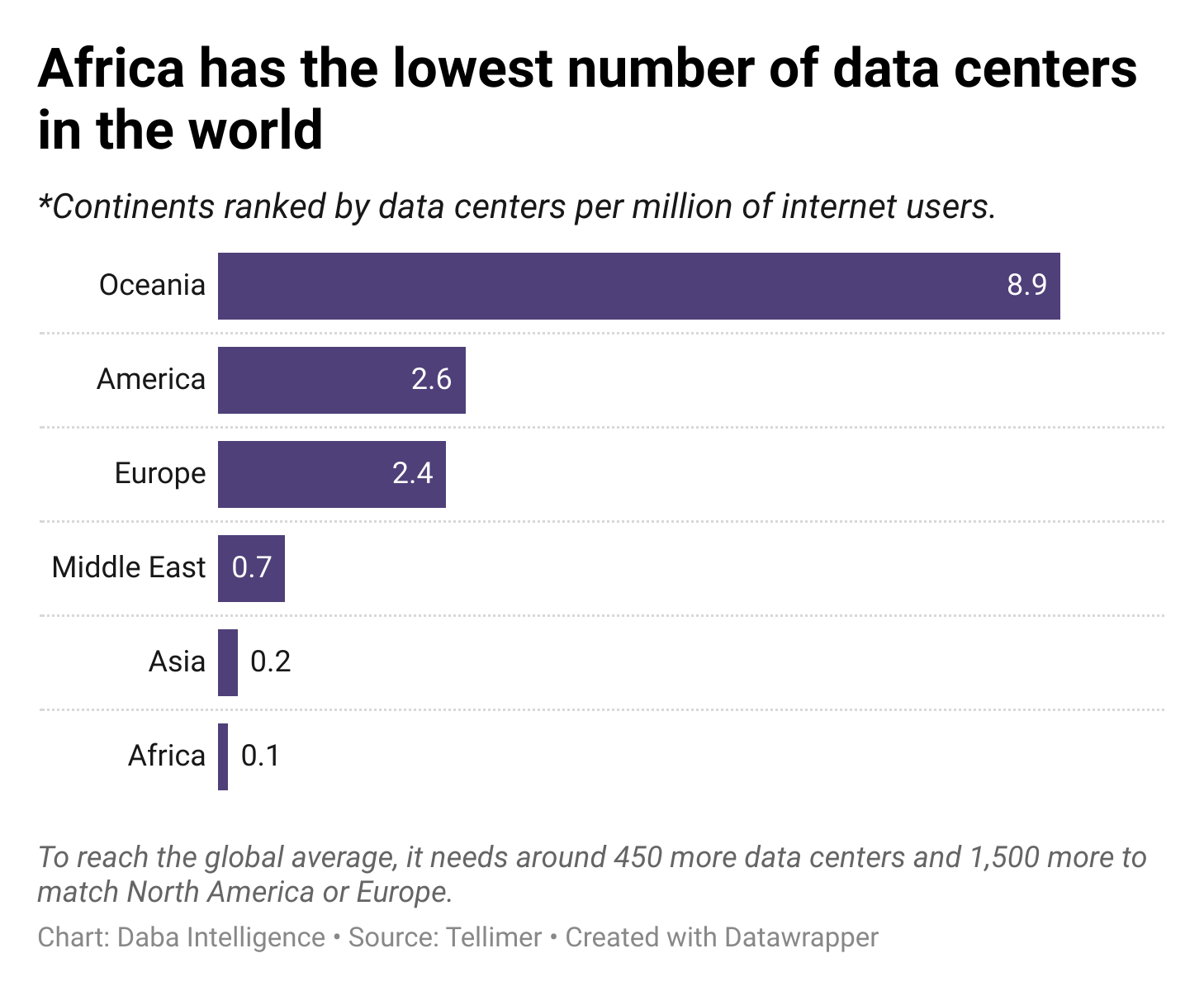
    Despite the investment deals and figures, Africa still needs way more data centers to match other continents than is currently being built.

    Currently, Africa has 17% of the global population but only about 2% of all colocation data centers globally—quite a gap!

    For a better perspective, the continent has only 0.1 data centers per million internet users, far behind the global average of 0.9.

    And as of last year, it only had five more data centers than the Indian city of Mumbai alone.

    To reach the global average, Africa needs around 450 more data centers and 1,500 more to match North America or Europe.

    In addition to the growing demand for cloud-based services among businesses, more of these facilities are needed to support Africa’s growing digital population.

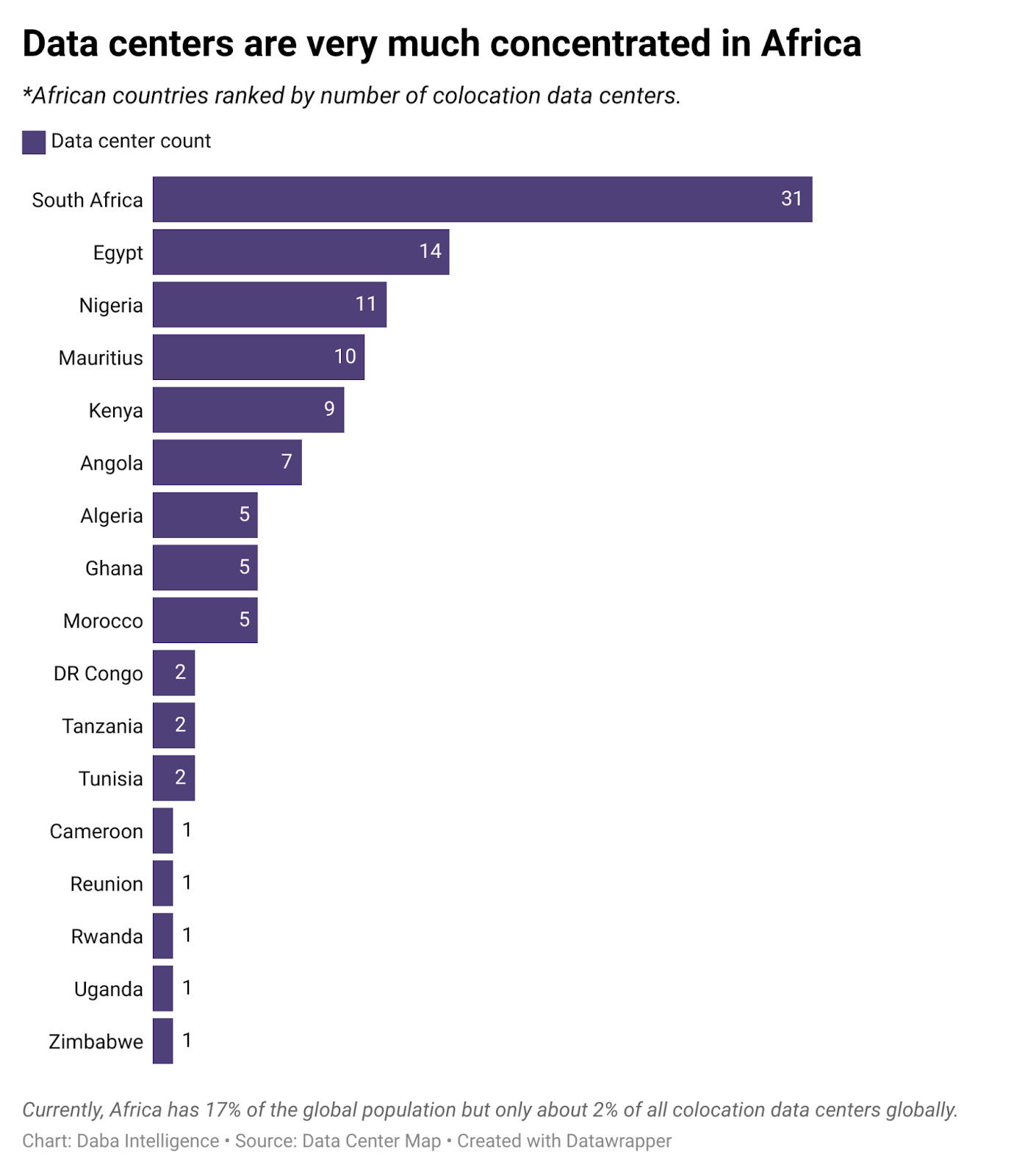
    The existing data centers on the continent are also very much concentrated in a few African countries. 

    For instance, Nigeria, Kenya, and South Africa together host about 60% of sub-Saharan Africa’s commercial data centers.

    The latter alone has the most data centers in the region and is expected to account for the bulk of Africa’s $5 billion data center market by 2026.

    The major data center markets will continue to attract the lion’s share of investment into the sector.

    But the good news is that smaller economies such as Ethiopia, Morocco, Algeria, Ghana, Cote d’Ivoire, Zambia, DRC, Namibia, and Rwanda are starting to attract noticeable funding.

    They’ve received up to $700 million of capital investment annually for two years now, per research firm Xalam Analytics, which closely monitors the industry.

    Big tech’s increasing investments in Africa’s data center capacity expansions indicate significant growth potential for the market. 

    And it comes as Africa’s digital revolution needs more capacity to support its growing smartphone and internet users, 4G expansion, and 5G rollout.

    The increasing number of data centers across the continent also creates new opportunities for telecom players.

    It’s a huge opportunity for investors that big tech companies are moving fast to capture, as the numbers show.

    An exciting future

    Amid a rapidly growing digital economy, we can expect more data center capacity expansion across various countries in Africa.

    And as large numbers of data centers along with large power capacities come up, Africa can be called—and rightly so—the next frontier of the data center industry.

  • Raisons d investir dans les marchés émergents d Afrique 🌍

    Raisons d investir dans les marchés émergents d Afrique 🌍

    Le continent africain devient rapidement l’une des nouvelles destinations les plus prometteuses pour les investisseurs des marchés émergents.


    En fait, depuis plus de 20 ans, le Forum économique mondial a identifié que plus de la moitié des économies à la croissance la plus rapide dans le monde se trouvent sur le continent. Avec des ressources naturelles abondantes, une main-d’œuvre jeune et de plus en plus éduquée, une stabilité politique relative et des perspectives indéniables de croissance économique, il n’y a aucun doute sur la vitalité pour les investisseurs.

    De bout en bout, l’Afrique fait partie des rares marchés émergents à l’échelle mondiale ; l’expression, inventée par des économistes au début des années 1980, définit l’investissement dans les pays en développement. Comme toute décision d’investissement, il y a des risques inhérents, mais voici cinq raisons pour lesquelles notre direction croit que l’Afrique mérite une chance :

    1. Potentiel de croissance 📈

    Actuellement, l’Afrique représente environ 17% de la population mondiale, mais seulement 3% du PIB mondial. Ces données attestent non seulement d’un échec historique à exploiter le potentiel de développement du continent, mais mettent également en évidence les formidables opportunités à venir. Si l’Afrique continue de maintenir et d’accélérer ses réformes structurelles, beaucoup croient que le continent peut imiter la montée rapide de la Chine au cours des 50 dernières années.

    1. Innovation 💡

    Les révolutions industrielles, qu’elles soient entraînées par la vapeur, les chaînes de montage ou les ordinateurs, ont historiquement été lentes à balayer le continent africain. Cependant, l’ère de l’Industrie 4.0, de l’énergie propre, de l’intelligence artificielle et de l’innovation numérique promet d’être différente. Contrairement aux précédentes vagues de changement industriel, avoir une part dans l’ère numérique ne nécessite pas une expertise étendue ou des investissements massifs en capital. Au lieu de cela, les innovateurs et les entrepreneurs des marchés émergents sont en position de puiser dans les flux de talents et de connaissances numériques et de les convertir en biens, services et modèles commerciaux.

    1. Valorisations plus basses 📉

    Au cours de la dernière décennie, les actions africaines n’ont pas été une success story – du moins pas par rapport à des régions similaires. Les indices MSCI US et MSCI Developed World ont augmenté respectivement de 232% et 159% au cours des dix dernières années, tandis que le MSCI South Africa et le MSCI EFM Africa ex. South Africa n’ont gagné que 33% et 23%. Cela dit, certains se demandent si les actions africaines ont été à la traîne à cause de problèmes sur le continent. La réponse courte : pas vraiment. Cependant, cela présente une opportunité unique pour les investisseurs – une plus grande part de capital dans les entreprises dans lesquelles vous choisissez d’investir.

    1. Diversification 📊

    La diversification est la pratique qui consiste à répartir les investissements afin de réduire l’exposition aux risques associés à un seul type d’actif. Cette pratique vise à réduire la volatilité de votre portefeuille d’investissement au fil du temps. Si vous attendiez patiemment une opportunité d’investir dans des actions internationales, l’Afrique se présente comme une option digne.

    1. Classe moyenne en augmentation 💼

    Selon le Forum économique mondial, d’ici 2030, plus de 40% des Africains appartiendront aux classes moyennes ou supérieures ; en conséquence, il y aura une demande accrue de biens et de services. Sans parler du fait que la consommation des ménages devrait atteindre 2,5 billions de dollars (oui, billions), plus du double de celle de 2015 qui était de 1,1 billion de dollars. Une augmentation du capital ne peut signifier que plus d’opportunités de croissance économique et de développement à travers le continent, ce qui amène de plus en plus d’investisseurs à se tourner vers l’Afrique.

    C’est là qu’intervient daba. Notre plateforme simplifiée fournit ce que nous appelons des « investisseurs de tous les jours » avec des analyses d’investissement et des ressources pour la création de richesse, afin de rendre leurs décisions d’investissement dans les marchés de capitaux privés et publics africains durables.

    Pour en savoir plus sur daba et comment rejoindre notre communauté mondiale croissante d’investisseurs, visitez dabafinance.com ou connectez-vous avec nous sur LinkedIn !